It’s raining like crazy here. Not good for a Mama cooped up inside with three littles ones, but great for the garden!
I am blessed to have a beautiful yard in which to grow some yummy fruits, veggies, and herbs for my family. But it wasn’t always that way. Before this home, we were in a small town home with ZERO yard. But I did a deck garden. I started with a couple of pots of tomatoes my first year. Then I added some chives and other herbs. The next year I tried adding peppers and beans…and now each year I delve deeper into foraging the wild stuff, companion planting, natural pest control, composting, and many other aspects of my green thumb habit 😉 So much to post about, so little time!!
Making the decision to start a veggie garden is a big one. It’s extremely overwhelming and most people don’t know where to begin, so they just don’t. Which makes my sad face come out. Have no fear–I am here to help! Please, please do not forego a veggie garden because of intimidation. You may think I’m being dramatic, but being out in your garden just might change your way of thinking and your way of life. Yes, it’s that amazing.
Here are my tips:
1.) Have a plan. This is the biggest and most complicated step. But you will be glad you did this, trust me. A lot of people just wing it and things don’t grow or they end up wishing they had planted different items or the plants get out of control or they are overtaken by pests….you need to have a plan.
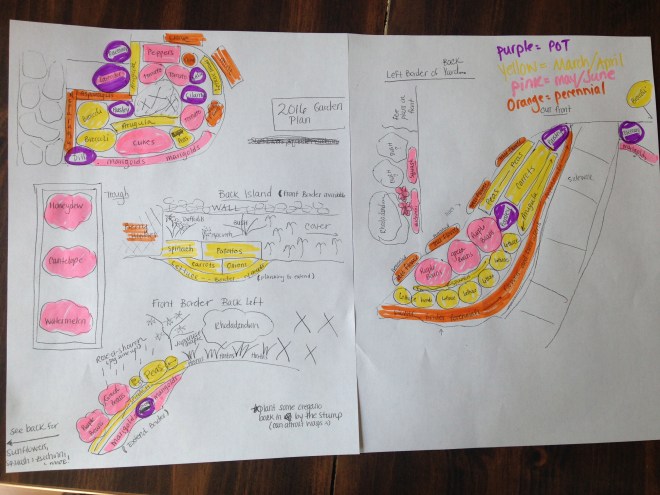
Your plan should take into account which plants grow well (or poorly) next to one another. Look up companion planting to learn about this. You should also think about how much space you have vs. how much space your plants will take up once mature. A deck garden with pots…not the best space for squash, zucchini, melons and the like. A good garden plan also maps out a planting schedule. Some items need to be planted earlier in the season and some later. Some veggies (like broccoli, spinach, lettuce, and many others) actually can yield two crops each year–a mid-summer crop and an early fall crop. Others still (asparagus, for one) are perennials and will come back each year so those plants need a permanent space in the garden. So read your seed packets. Finally–and this may seem obvious, but it needs to be said–think about what you actually want to eat! Don’t grow 5 tomato plants because they work well in pots and you only have a terrace garden, if you don’t eat tomatoes!!!
There are lots of options out there. Figure out what you’ll eat and want to grow, how it can fit in your space, where things should be placed, and when to plant. You can Google most if not all of this information or you can pick up some books at your local library. I’ll leave a list of some of my favorite resources at the bottom of this post. Here is a photo of my garden plan for this year for inspiration–feel free to use all or part of it!
2.) Do some research and think about pest control. I personally don’t do chemicals. I use the plants themselves to control pests (again, check out companion planting), barriers, and my own homemade essential oil pesticide. Which works like a charm, might I add. I’ll be posting more about this as the season goes on and I can show you some pictures of my thriving, pest-free garden! 🙂 But for now, below are the oils I use in my non-toxic pesticide. Are you sitting there scratching your head going…Essential oils?? What is she talking about?? Then you need to click here. Want to get these oils so you can make this pesticide for yourself? Then you need to click here! 🙂 Do some research if you plan to use fences or barriers. Some little critters are very tricky! For instance, rabbits will dig right under your barriers (deter by angling 90 degrees at the bottom and burrying a few inches deep) and deer can be very swift! They will jump over a fence unless it is roughly 6 feet high. A quick Google can help you with all of this.


3.) Check your calendar and get a garden-sitter when needed. Seriously. The first year I didn’t do this or even think about it and I went on vacation for a week in July…guess what I came home to? Bingo! A shriveled up garden 😦
4.) Water, water, water! Don’t forget to water your garden DAILY. It really does need daily watering (unless it rains of course!). If you slip up and skip a day, don’t beat yourself up, but watering your garden daily is a must. The best time to water is early morning or late afternoon. Best not to water during mid-day heat if at all possible and be careful not to water too close to dusk, as certain plants are susceptible to mold and mildew if the leaves do not have time to dry off before the cool of night.
5.) JUST GO FOR IT. When you are out in the garden with your hands in the dirt, when you are caring for those plants like pets, when you are teaching your children about where their food comes from, when you are picking beans and putting them into your basket or eating a blueberry right off the bush at harvest time…You will be glad you did.
Resources I like for gardening:

 Five Little Duckies
This was so inspirational and well written!!!
LikeLike