Summer Salads…yum!

Oh boy do I LOVE salads! There is truly endless possibility here but I want to talk about “summer salads” which, in my mind, tend to be a little lighter and include some more exotic items and toppings. My mouth is watering just thinking about this post!! ๐Ÿ™‚

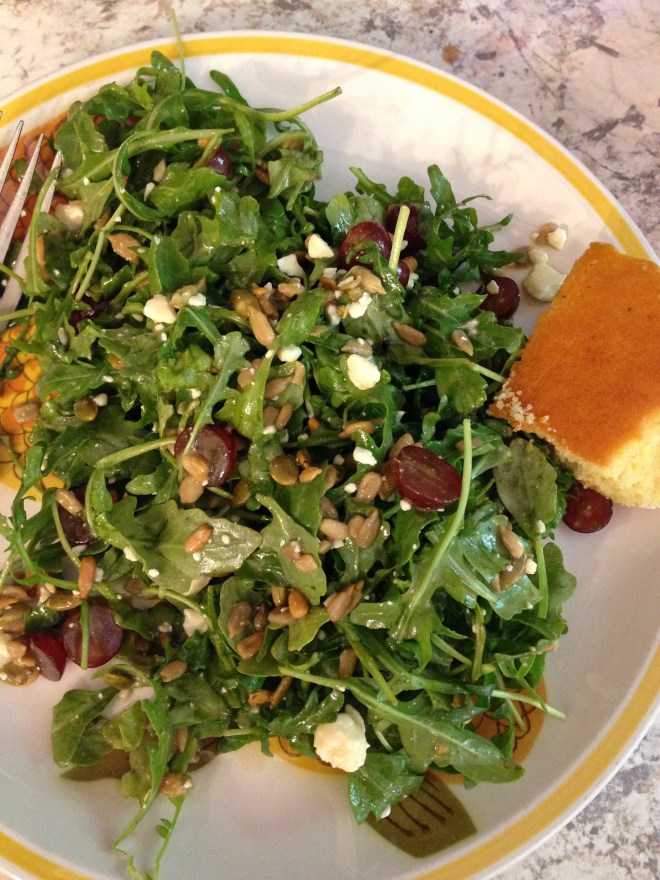
One of my favorite things to add to summer salads is fruit! Certain fruits pair better with certain greens and dressings. You also really can’t go wrong pairing nuts and seeds with summer salads, either. I’m going to list for you some of my favorite ingredients by categories so you can reference this post to mix and match as your taste buds guide you! I’m also going to share with you some of my favorite combinations ๐Ÿ™‚

Greens

Arugula is my personal go-to green. I LOVE arugula. It happens to be one of my favorite foods of all time…I know, I’m weird. ๐Ÿ˜‰ Other bases can include spinach, baby mixed greens, iceburg lettuce, romaine, kale, mesclun, butter lettuce (also love this one!), red leaf, and redicchio.

Fruits

For summer salads, you can’t go wrong adding fruit! In fact, don’t forget the almighty but often overlooked fruit salad. Every now and then, you just need a cool, refreshing plate of fruit! Pears, strawberries, peaches, blueberries, and grapes are some of my favorites to add to salads with greens. As far as dried fruit, I also love adding raisins, dried cherries, coconut, cranberries, or dried cherries.

Seeds and Nuts

Sunflower seeds, pepitas, cashews, almonds, hazelnuts, and pecans are my favorites but obviously there is a host of other options in this category. Others I can think of off the top of my head are flax seeds, chia seeds, hemp seeds, walnuts, peanuts, and pistachios.

Cheeses

Ahhh….cheese. One of my main food groups ๐Ÿ˜‰ If you are vegan, leave this one out. My favorites are cheddar, feta, provolone, smoked gouda, goat cheese, parmesan, romano, robusto, and fresh mozzarella. Of course the list of cheeses is endless so I’ll let you be adventurous and Google the heck out of this category for some new ideas!

Veggies

Avocado is great for summer salads. Same for tomatoes, cucumbers, peppers, onions, and pretty much anything else that is growing in your garden right now! I do love going out to the garden and just freshly picking whatever is there but if you aren’t growing a garden (you should try it!), then just pick up whatever veggies look yummy at the store. Carrots, radishes, mushrooms, and sweet peas are a few more favorites of mine!

Herbs

I L-O-V-E putting fresh herbs in my salads. I’m not sure if other people do this regularly, but everyone should! ๐Ÿ˜‰ My favorites are chives, dill, parsley and basil but I also add cilantro, oregano, or mint when it’s called for!

Other toppings

Well you all know I’m into sprouts right now. Did you know there are LOTS of different sprouts? Broccoli and alfalfa are my favorite but there’s also sunflower, radish, chickpea, mung bean (and various other beans), lentil, buckwheat, and the list goes on and on. And of course nothing beats a little fresh ground black pepper on top of the salad ๐Ÿ™‚ Yum!

IMG_4801

Dressings

I can’t even get into all the dressings out there. But I’m into low-sugar dressings for sure. And my favorite thing to do is make my own dressing. Usually with olive oil and balsamic but I’ve also looked up recipes for whatever mood I’m in when I’m ready for my salad ๐Ÿ˜‰

Delicious! And here are a few of my favorite combinations (so far!).

Mix #1: Arugula, blueberries, gouda cheese, sunflower seeds, tomatoes, broccoli sprouts, dill, chives, parsley, and black pepper.

Mix #2: Mixed greens, pepitas, avocado, tomato, fresh mozzarella, onions, yellow bell peppers, fresh basil, black pepper.

Mix #3: Spinach, strawberries, cashews, feta cheese, fresh mint, black pepper.

I have so many others! But these will be a good starting point for you if you don’t have time to mix and match right off the bat because these are three very different “styles” of salads

. Just be creative and experiment. If it sounds like it’s going to be delicious…it probably will be ๐Ÿ™‚

Meatless Mondays

I’ve been doing meatless Mondays for quite some time now. Did you know many people claim that going meatless just once a week (for the whole day–not one meal!) can reduce your risk of heart disease, cancer, diabetes and obesity? It will also help you do your part to heal our desperately depleting planet…you can save massive amounts of water, reduce greenhouse gasses, and reduce fuel dependence just by skipping meat one day a week. Sounds like a win-win to me! Plus, you get to be creative in your kitchen and discover new dishes you’ve probably never made before. If you want to learn more about the benefits of meatless Monday, check out this site ย ๐Ÿ˜‰

At first “Meatless Monday” was a challenge but now I have some really reliable dinner staples that I rotate (veggie tacos, spinach quiche, roasted root veggies, pasta or ravioli, and mac and cheese with various added veggies are my go-to’s). Then there are the nights where I just kinda of play around with the ingredients I have in the house and every now and then a masterpiece is born. Which is exactly what happened this past Monday.

I had gotten some red lentils at Whole Foods. I’ve never worked with red lentils before, but I’ve used brown lentils and green lentils and my kids love them. I decided to follow the instructions on the Whole Foods label to be sure I prepared them correctly. So, I rinsed the lentils, put the water on, let it come to a boil, added the lentils and set the timer for 40 minutes.

I went to chopping my root veggies, because my goal was to make root veggies in the crock pot and serve them with the lentils. Pretty simple and basic.

Wellllll…..after 20 minutes when I got my veggies and herbs and spices in the crock pot, I opened the lid to the lentils and to my complete surprise (remember, I still had 25 minutes left on the timer), they were completely pulverized!!!! Into a soup almost! After I stood there with my jaw on the floor for a moment, I had two thoughts: #1–this would be a REALLY easy way to make lentil soup for this kids! #2–This looks a bit like curry….

IMG_4495

Which is how my dinner was born ๐Ÿ™‚

I decided to make this into a version of an Indian dish. Now, I have kids that won’t eat ONE FLAKE of black pepper because it’s “too spicy.” So I use spicy things extremely minimally. That doesn’t mean your food can’t have lots of flavor! I added some cumin to this, a bit of garlic salt, and a TINY bit of turmeric (don’t tell the kiddos!). Then after tasting it, instead of making the veggies the star of the dish, I knew I had to make this creation the star of the dish.

I let the veggies get nice and done in the crock pot…love the smell of a crock pot filling up a house! So I ended up serving this dish layered like this: rice on the bottom, my new “curry lentils” over the rice, and veggies on top. IT WAS A HUGE HIT! I was asked by all my duckies (including papa duck) to put this baby in the rotation. So, I have! ๐Ÿ™‚

Happy eating, friends!

Part One: root veggies in the crock pot

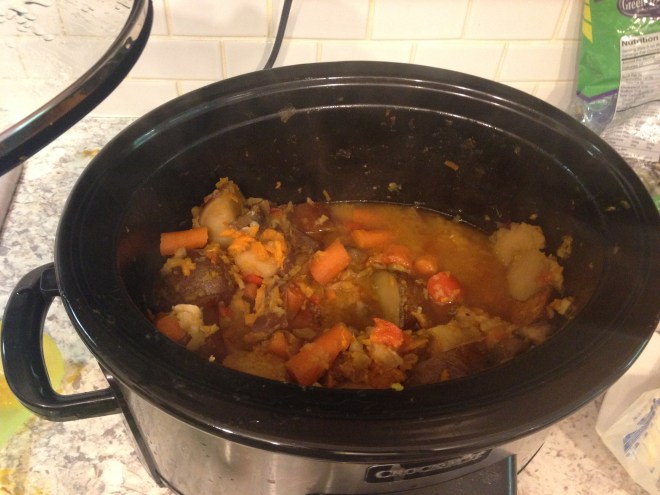
Chop your root veggies…the beauty here is that you can use any veggies you want! In this recipe, I used carrots, parsnips, potatoes, purple potatoes, sweet potatoes, mushrooms, ย onions, garlic, and added some pepper and a pinch of garlic salt. Throw everything in the crock pot. Add some vegetable broth. Enough to help make the veggies soft, but not so much that you end up with a stew instead of perfectly cooked veggies. The broth should cover the bottom of the crock pot about one to two inches. Set the crock pot for high 4 hours or low 6 hours. You will want to check it a few times to be sure veggies are getting tender but not pulverized. (Photo is after cooking!)

IMG_4496

Part Two: curry lentils and rice

Use red lentils. Rinse and drain them (do not soak). Follow directions on package for water-to-lentil ratio. Bring your water to a boil. Add red lentils and set timer for 20 minutes. After 20 minutes, lentils should have formed a thick, pulverized stew-like consistency. Add cumin, turmeric, and garlic salt to taste.

Prepare a rice of your choice following directions on the package.

Part Three: plating ๐Ÿ™‚

First plate the rice. Then ladle some of the yummy lentils on top of the rice to get it all juicy. Add veggies on top and serve hot. If you want it to look fancy, add a fresh sprig of parsley on top of the veggies. YUM!

IMG_4498

How Does Your Garden Grow?

It’s raining like crazy here. Not good for a Mama cooped up inside with three littles ones, but great for the garden!

I am blessed to have a beautiful yard in which to grow some yummy fruits, veggies, and herbs for my family. But it wasn’t always that way. Before this home, we were in a small town home with ZERO yard. But I did a deck garden. I started with a couple of pots of tomatoes my first year. Then I added some chives and other herbs. The next year I tried adding peppers and beans…and now each year I delve deeper into foraging the wild stuff, companion planting, natural pest control, composting, and many other aspects of my green thumb habit ๐Ÿ˜‰ So much to post about, so little time!!

Making the decision to start a veggie garden is a big one. It’s extremely overwhelming and most people don’t know where to begin, so they just don’t. Which makes my sad face come out. Have no fear–I am here to help! Please, please do not forego a veggie garden because of intimidation. You may think I’m being dramatic, butย being out in your garden just might change your way of thinking and your way of life. Yes, it’s that amazing.

Here are my tips:

1.) Have a plan. This is the biggest and most complicated step. But you will be glad you did this, trust me. A lot of people just wing it and things don’t grow or they end up wishing they had planted different items or the plants get out of control or they are overtaken by pests….you need to have a plan.

Your plan should take into account which plants grow well (or poorly) next to one another. Look up companion planting to learn about this. You should also think about how much space you have vs. how much space your plants will take up once mature. A deck garden with pots…not the best space for squash, zucchini, melons and the like. A good garden plan also maps out a planting schedule. Some items need to be planted earlier in the season and some later. Some veggies (like broccoli, spinach, lettuce, and many others) actually can yield two crops each year–a mid-summer crop and an early fall crop. Others still (asparagus, for one) are perennials and will come back each year so those plants need a permanent space in the garden. So read your seed packets. Finally–and this may seem obvious, but it needs to be said–think about what you actually want to eat! Don’t grow 5 tomato plants because they work well in pots and you only have a terrace garden, if you don’t eat tomatoes!!!

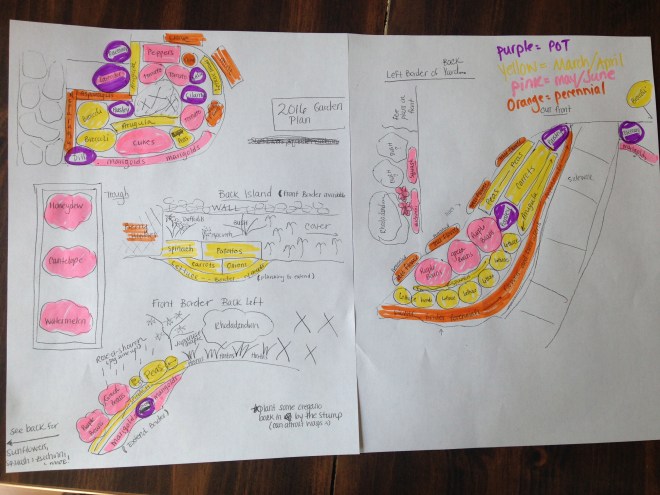
There are lots of options out there. Figure out what you’ll eat and want to grow, how it can fit in your space, where things should be placed, and when to plant. You can Google most if not all of this information or you can pick up some books at your local library. I’ll leave a list of some of my favorite resources at the bottom of this post. Here is a photo of my garden plan for this year for inspiration–feel free to use all or part of it!

IMG_3978

2.) Do some research and think about pest control. I personally don’t do chemicals. I use the plants themselves to control pests (again, check out companion planting), barriers, and my own homemade essential oil pesticide. Which works like a charm, might I add. I’ll be posting more about this as the season goes on and I can show you some pictures of my thriving, pest-free garden! ๐Ÿ™‚ But for now, below are the oils I use in my non-toxic pesticide. Are you sitting there scratching your head going…Essential oils?? What is she talking about?? Then you need to click here. Want to get these oils so you can make this pesticide for yourself? Then you need to click here! ๐Ÿ™‚ Do some research if you plan to use fences or barriers. Some little critters are very tricky! For instance, rabbits will dig right under your barriers (deter by angling 90 degrees at the bottom and burrying a few inches deep) and deer can be very swift! They will jump over a fence unless it is roughly 6 feet high. A quick Google can help you with all of this.

3.) Check your calendar and get a garden-sitter when needed. Seriously. The first year I didn’t do this or even think about it and I went on vacation for a week in July…guess what I came home to? Bingo! A shriveled up garden ๐Ÿ˜ฆ

4.) Water, water, water! Don’t forget to water your garden DAILY. It really does need daily watering (unless it rains of course!). If you slip up and skip a day, don’t beat yourself up, but watering your garden daily is a must. The best time to water is early morning or late afternoon. Best not to water during mid-day heat if at all possible and be careful not to water too close to dusk, as certain plants are susceptible to mold and mildew if the leaves do not have time to dry off before the cool of night.

5.) JUST GO FOR IT. When you are out in the garden with your hands in the dirt, when you are caring for those plants like pets, when you are teaching your children about where their food comes from, when you are picking beans and putting them into your basket or eating a blueberry right off the bush at harvest time…You will be glad you did.

Resources I like for gardening:ย 

Rodale’s Successful Organic Gardening: Companion Plantingย โ€“ September, 1994ย by Susan McClureย (Author), Sally Rothย (Author)