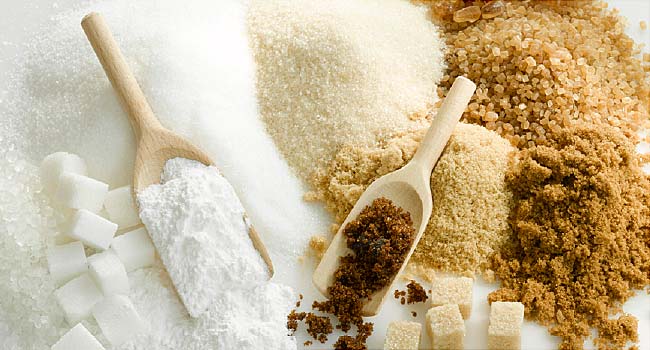
So…the white stuff. Oh how we all love it. I could write a novel on sugar, so I’m planning to break it into a few smaller posts. Who doesn’t love that feeling when you’ve been craving some chocolate and you finally get your hands on the dark, velvety stuff, and you pop it in your mouth and the world just feels nice for a second? (Then the kids pull at your jeans, the cupboard door hits you in the head, the doorbell rings, and the baby pees on the floor…but you had a nice second there when the sweet stuff hit your system!) Does this sound a bit like an addict talking??? That’s because it is. We can absolutely 100% be addicted to sugar–and most Americans are. Check out this article by Dr. Mark Hyman explaining why sugar addiction is a fact, not a myth. You can even take his little self evaluation to see if you may be heading to the next SEA (Sugar Eaters Anonymous) meeting (pretty sure this isn’t an actual group but if you Google that term, you can find some actual resources for support groups). You are probably sitting here reading this thinking, “Wow, that’s sad. Those poor saps are addicted to something like SUGAR?! So lame…” I have news for you, friend…you are probably one of “us”!

It is surprisingly easy to become addicted to sugar. And the food industry is not trying to stop it. In fact, the opposite is happening. They are fueling the fire as much as possible. They want each one of you to be a sugar addict..and they are your supplier. If you’ve never seen one of the many documentaries out there on this topic, may I suggest my absolute favorite, Fed Up, which features the lovely Katie Couric. Their website is a wonderful resource, so check it out. This is a truly eye-opening film. If you walk away from this film and your eating habits don’t change and you especially don’t change what you’re feeding your kids, you either have the sugar thing figured out already or you should have your pulse checked. 😉 The moment this film was over, I was raiding my cupboards, tossing all kinds of what I thought were “healthy” snacks into the trash. It totally changed how I shop, how I bake, and how I view my childrens’ bodies. And previous to viewing the film, we were definitely already a healthier household than most. We eat only organic, we don’t do many processed foods, and we are admitted food snobs when out and about. Before viewing this film, I knew sugar was bad for us and I definitely limited it with sweets and treats, but the biggest takeaway for me is how grams and grams of sugar are literally hiding in just about every food you eat. Three of the most shocking items for me were yogurt, marinara sauce, and whole milk. And that brings me back to the food industry and their agenda…
The food industry has a vested interest in you becoming a sugar addict. Because they are your supplier. Pick up something from your pantry and come back to this page…go ahead. I’ll wait.

Welcome back…now look at the sugar content. It tells you how much sugar is in the product in grams, correct? Now, do you see the percentage of daily recommended value next to the sugar content like you do for all the other nutritional values? Right. It’s ok…I’ll give you a second to pick your jaw up off the floor…it is not required for the daily percentage of sugar intake to be listed…on anything. Let me repeat that. The FDA does not require the “percentage of daily value” for sugar to be listed on nutritional labels in the US.
I felt like such a jerk when this fact was exposed in the film Fed Up. I felt stupid for never having noticed. I felt taken advantage of for this not being an FDA requirement. And I felt angry for never having been educated on this. Here’s why the sugar industry has finagled the FDA into allowing them to refrain from listing the recommended daily value percentage on food labels: because the actual recommended daily values are so low that almost every single item in the store would be far above 30 or 40 or 50 percent of the recommended daily value, and that would look bad for the sugar industry. If you try to find an answer about why the daily percentage values aren’t listed, you will find some rigamarole about how it’s too difficult to measure the sugar content of many products because there is no way to separate naturally occurring sugars from added sugars, blah, blah, blah. In my mind, it is clear to me that this argument is complete drivel. They have the means to measure the sugar content. Clearly. Because it’s already been measured and added to the label. Whether or not it’s added sugar or naturally occurring sugar or a combination of both, it still comprises the percentage present in the product. No? Seems like common sense to me. Here are some facts that will knock your socks off:
Recommended daily sugar allowance according to the American Heart Association and WHO:
- Adult Male: 37.5 grams (approx. 9 teaspoons)
- Adult Female: 25 grams (approx. 6 teaspoons)
- Children 8 and under: 3-4 teaspoons (approx. 12-17 grams), depending on body weight
- Children ages 9-18: 5-8 teaspoons (approx, 21-35 grams), depending on body weight
Seems reasonable, right? If you’re a label reader and you already have a sense of the number of grams of sugars in your food products, you may already be breathing into a paper bag. But if you’re not really a label reader: #1, these numbers may mean nothing to you and #2, I hope you will be a label reader after you’re through with this blog!

The grams seem high, but they’re not. Take a look at the teaspoons. Do you drink coffee? Do you add sugar to it? If so, how many teaspoons? Two, you say? Boom! You just used up one third of your daily allotted sugar on your FIRST cup of coffee. Does that put it into perspective? Do you ever pick up one of those yummy Starbuck’s concoctions as your first cup of coffee of the day? If so, I’d be taking a serious look at the sugar content next time you’re in line for your sugar fix. Let’s say you don’t add sugar to your coffee and you’re not a fan of “dessert coffees” as I now like to call them. What did you have for breakfast this morning? Cereal? Yogurt? Instant oatmeal? If you’re heating up Quaker Old fashioned Oats and putting nothing on them, more power to you! But chances are that’s not the case. Just as an example, Nature’s Path Blueberry Cinnamon Flax instant oatmeal has 8 grams of sugar per serving. Kashi Heart-to-Heart Apple Cinnamon has 11 grams per serving. You want to talk about yogurt for a minute? Most plain (unflavored), greek yogurts have 5 grams or less. So if you’re eating that plain and not mixing it with a sugar-coma inducing granola or cereal, it’s not so bad alongside other low or no-sugar options. If, however, you’re reaching for Danon Activia, you’re looking at anywhere between 11 and 25 grams in that tiny little cup. You read that correctly. Most flavored yogurts–greek or not–are in the 20-32 gram range for ONE TINY CUP. It is outrageous! That exceeds your entire daily recommended intake if you’re an adult female!!!! Dry cereals and granolas are maddening, too. Raisin Bran: 18 grams in one serving. Golden Grahams: 13 “golden grams” of sugar! Lucky Charms: 13 grams. Kellogg’s low fat granola with raisins: 25.5 grams. What!? And you know I have to go through pasta sauces because this one was a shocker to me. Ragu tomato, garlic and onion: 12 grams. Barilla marinara sauce: 9 grams. Prego Heart Smart (laughable!): 10 grams. Bertolli tomato and basil: 12 grams. Check your milk, too.
Now would be a good time to go take a thorough look in your fridge and cupboards…how much sugar are you consuming BY LUNCHTIME? How much sugar are you putting into your babies before they even leave the house in the morning??? How much sugar are they getting in their school lunches? How about at their friends house? Or out of your own cupboards when you’re not there to monitor them after school? I was appalled to see that in my “healthy” household, we were reaching our sugar limit by lunchtime on most days and definitely by dinner time on all the other days. I guarantee you that most Americans hit their sugar limit before breakfast is over.
I’m not one to take the drastic approach and totally 100% ban sugar from my house–that will just make the kids want it more and develop a very bad relationship with sugar. Plus, let’s be honest…I want some sugar sometimes, too! What I can and will do is make sure my kiddos are eating as many whole foods as possible instead of processed foods. I can monitor the added sugar they are getting for meals and snacks that I provide. I can keep extremely unhealthy options out of my house. And, perhaps most importantly, I can educate them on this matter and teach them that a cookie or a cupcake once in a while or a mildly sweet snack once a day is not the problem. When it’s time for a sweet, have a sweet. I mean, I want to know when I’m eating a sweet! But when it’s time for a balanced meal or a healthy snack, I shouldn’t be getting duped into thinking I’m having something healthy when in reality it’s full of added sugars, which are throwing my body into a tailspin…more on that next time 😉 For now, I hope I’ve been able to shed some light on lurking sugars and what a healthy amount of sugar looks like for you and your family. In closing, have fun raiding your pantry!!!





 Five Little Duckies